ArriveOK reads your whole itinerary, for everyone traveling with
you, and tells you what each stop allows, what each person must carry, and what has to be
dealt with before you leave. Every answer names the official page it came from and the
day it was last checked.
One locker, everyone you travel with, and every stop on the
itinerary read in order.
Nobody publishes the answer for your trip.
They publish fragments, for one country, one carrier, one checkpoint,
and expect a traveler to assemble it. Most people guess, and find out at the checkpoint.
The rules are scattered
A customs agency, an aviation authority, an airline, an airport, and a health ministry each publish part of the answer, in five places, in their own words.
They change per person
A child’s allowance is not an adult’s. A passport decides the visa. An age decides whether shoes come off or a car can be rented.
They change per stop
What is fine where you take off can be seized where you connect, and prosecuted where you land.
Getting it wrong is expensive
A confiscated camera battery, a denied boarding, a fine at the border, or a trip that ends in a room at the airport.
The Gear Locker
Say what you own once. Check it on every trip after that.
Each traveler gets a shelf. A device joins it from the catalog, or from a photograph of
the label on its battery, and it keeps its watt-hours, its recall status, and who carries
it. The next trip already knows about it.
Watt-hours read from the maker, never assumed from milliamp-hours
A recall check against the manufacturer and consumer-safety feeds
Items that belong to a person, so a family’s bags can be planned
SSam
MacBook Pro 1699.6 Wh
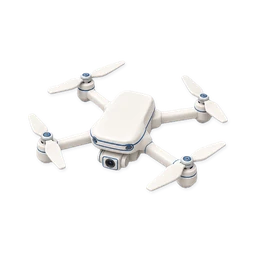
DJI Mini 4 Propooled
3 spares18.96 Wh each
Phone12.7 Wh
JJordan
MacBook Air 1353.8 Wh
Power bank103.2 Wh
Phone12.7 Wh
AAvery
iPad Pro 1338.9 Wh
Console15.8 Wh
Phone12.7 Wh
Travelers and profiles
A trip is rarely one person.
Everyone traveling with you has a profile: a name, a birthday, a passport, and a color
that follows them through the whole app. The rules that depend on who someone is get
applied to the right person, without you having to know they existed.
Allison turns 18 the week you land, so the adult allowance and the adult form apply on the way home, not on the way out.
Under-12s keep their shoes on at this checkpoint; the rest of the family does not.
The rental car needs a driver over 21 at this destination, and a surcharge under 25.
SSam41 · US passport
JJordan39 · US passport
AlAllison17 · US passport
AnAnna15 · US passport
AbAbigail11 · US passport
Ages are computed against each stop’s local date, so a birthday in
the middle of a trip changes the answer at the stop where it happens.
The whole journey, not one border
It reads every stop in order, and tells you the last place to fix it.
A multi-stop trip is where this gets hard: an item that is fine at
home, fine in the air, and a criminal matter on arrival. ArriveOK walks the itinerary in
order, for every person and every item, and names the last airport where something can
still be dealt with.
San Francisco SFO
Permitted
Everything in the locker can leave. Liquids 3.4 oz, laptops out of the bag at this checkpoint.
Istanbul IST · 4 h layover
Action needed
The last stop where the vape is legal. It cannot be checked or shipped, so it has to be left here.
Bangkok BKK
Prohibited
Possessing a vape is illegal in Thailand, with no exception for tourists. Confiscation, fines, detention, and a case a traveler may have to stay in the country to finish.
The last safe point is computed, not written by hand.
Thailand: FCDO
travel advice, verified .
Worked answers
The rules that catch people out.
Not the obvious ones. These are the rules a careful traveler still
misses, because they only appear when a count, a route, or a border is taken together.
Action needed
Three spares over 100 Wh. The limit is two.
Sam packs two drone batteries and a laptop power bank. Each one
is legal on its own. Together they break a count rule almost nobody knows exists.
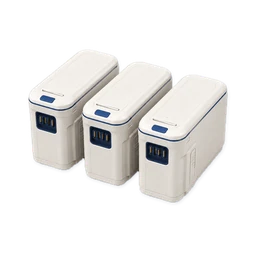
Skydio X10 flight battery156.17 Wh ×2
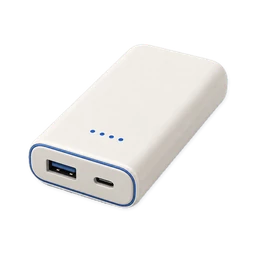
Omnicharge Omni 40+142 Wh
Over 100 Wh and up to 160 Wh, the airline has to approve a spare battery before the trip. Carry it in the cabin.
In that range a person may carry 2 spare batteries, with the airline's approval and in the cabin only.
At this rating the limit is 2 spare batteries per person, with the airline's approval. This trip has 3.
The power bank is fine until the domestic leg in China.
Since June 2025 a power bank may not board a domestic mainland
China flight unless it carries a legible CCC mark, and models from recalled batches are
banned outright. The same bank flies internationally without a word.
No CCC mark, or a marking that cannot be read
A model or batch under recall, after roughly 490,000 units were pulled in June 2025
Marked, legible, not recalled, and under 100 Wh: it boards
8,041 rules across 225
countries and 80 airports, each one naming the official page it came from and
the day it was last checked against it.
225CountriesCustoms, goods, entry, medication, and the checkpoint,
category by category.
80AirportsDuty-free, sealed bags on a connection, and the lane rules
of the country each one sits in.
Visas and entry
The part that decides whether you get in.
Batteries get confiscated. Entry paperwork gets you turned around. ArriveOK handles the
documents the same way it handles a power bank: per traveler, per passport, with the
deadline attached and the source named.
1
Which visa, for which passport
The requirement follows the passport, not the trip. Five travelers on three passports can need three different things for one destination.
2
The window, not just the rule
An arrival card that opens 72 hours before landing, a visa that must be paid before boarding, a vaccination certificate that has to be 10 days old.
3
The form, walked through
The official portal only, with the upload that has to be repeated in two places called out before it wastes an hour.
4
Proof, stored and ready
The approval QR for each traveler, the onward ticket, the lodging booking, all held in the trip and pulled up one traveler at a time at the desk.
Landed in Denpasar4 of 5 ready
SamVisa QR · arrival card
JordanVisa QR · arrival card
AllisonVisa QR · arrival card
AnnaVisa QR · arrival card
AbigailArrival card not filed
One screen at the desk, one traveler at
a time, with the trip only turning green when every person is complete.
Customs and allowances
Counting the things in your bag the way each country counts them.
Every country writes its own arithmetic, and almost none of it matches. Turkey allows
one duty-free phone every three years and wants its serial number registered inside
120 days. Chile allows two, but only to travelers 14 and older, so a family of five is
not simply five times one. ArriveOK holds the count, the age gate, and the registration
deadline together, per traveler.
Device counts per country, with the age gate that comes with them
Phone registration regimes, their grace periods, and the portal to use
Value allowances, the duty owed above them, and cash thresholds
Phones, three countries
Turkey1every 3 calendar years, registered within 120 days
Chile2travelers 14 and older; 30 days before an unregistered handset is blocked
Egypt5registration within 90 days of first activation
Eight checks, one itinerary, one answer per traveler.
Each one is the same shape underneath: a sourced, dated rule row, a
traveler, an item, and a verdict. Adding a country is adding rows, not rewriting the app.
Batteries and power banks
Watt-hours against the carrier and the route, spares, and the cargo-only line.
Customs electronics
How many laptops, tablets, phones, and cameras a country allows, and whether the phone needs registering.
Liquids and the checkpoint
The country floor, then the airport, then the lane, then the destination override, in that order.
Medications
What a prescription needs on arrival, and the common drugs that are controlled or banned outright.
Restricted and prohibited goods
Cannabis and CBD, vapes, weapons and tools, drones, satellite devices, and protected wildlife.
Visas, entry, and forms
The requirement per passport, the pre-arrival card and its window, and the proof to have in hand.
Plugs and voltage
The socket at each stop, the nominal voltage, and whether a device’s own input already covers it.
Bag by bag
Which bag each item rides in, per traveler, so the plan survives the checkpoint and the customs hall.
Why the answers can be trusted
No summaries. No guesses. A row, a source, and a date.
Every fact in ArriveOK is a row that names the official page it came
from and the day it was last checked. A row without both never renders. The verdict below was
computed while this page was built, from the same engine the live tool runs.
Every source the site uses is listed at Sources, with
the date each was last verified. When one changes, the row is flagged as unverified until the
next check.
Built for the way people actually travel
The anxious first-timer
Convinced something in the bag will be taken at security, and no idea which thing.
Every item in the locker gets a plain verdict before the trip, so the checkpoint holds no surprises.
The family of five
Five people, three passports’ worth of paperwork, and a bag limit nobody can keep straight.
One trip, everyone’s profile, pooled allowances, and a plan for which bag holds what.
The gear-heavy traveler
A drone, spare batteries, two cameras, and a customs officer who wants to know their value.
Watt-hours and counts per country, the receipts worth carrying, and the airline that will ask.
The multi-stop flyer
Four countries, three carriers, and a different rule at every one of them.
The itinerary read in order, with the last safe point named before anything is confiscated.
Know you'll arrive OK.
Build the locker once, add the people you travel with, and every
trip after that is one check instead of an evening of government websites.






 Skydio X10 flight battery
156.17 Wh ×2
Skydio X10 flight battery
156.17 Wh ×2
 Omnicharge Omni 40+
142 Wh
Omnicharge Omni 40+
142 Wh